The gathering: in awe of a Pembrokeshire starling murmuration


There are moments in nature photography when the scale and drama of a wildlife event transcend the limitations of a single image. Witnessing a starling murmuration on the banks of the Pembrokeshire Cleddau River in October last year was one of those events. As a nature photographer and writer based in Pembrokeshire, these are the scenes I live to capture.
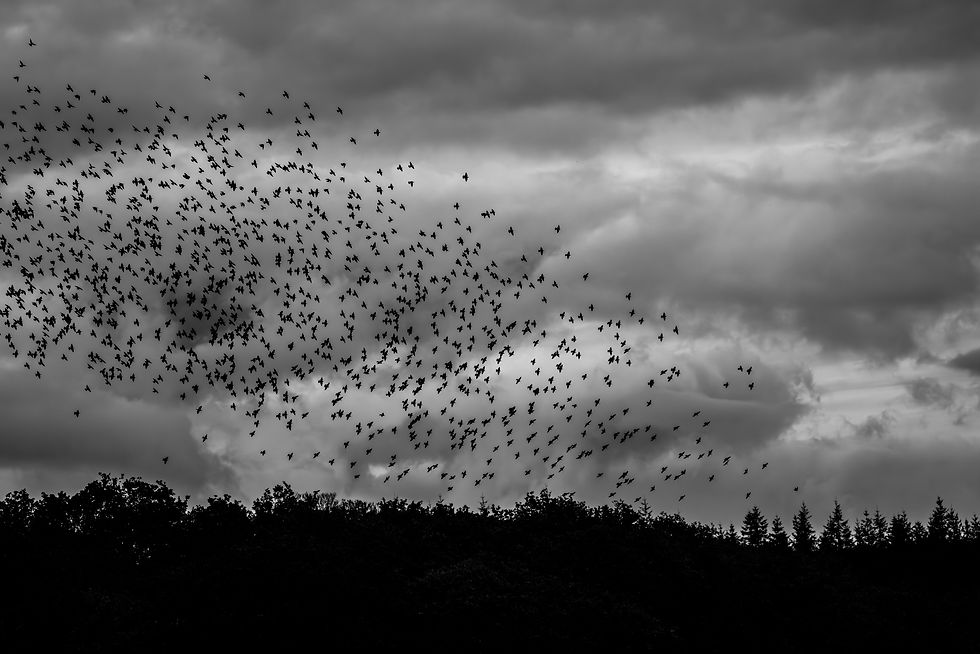
A huge sprawling cloud approaches, pulsating and streaking across the sky. As it nears the reeds across the river from where we stand, it swirls and bellies, then birds begin to rain from the sky. Hundreds of feathery arrows drop into the reeds, as torrent after torrent of starlings descend for the night. Though concealed from sight, their noisy chatter reaches our ears, growing in volume with each wave of birds that alight.
The allure of the roost
One weekend in October last year, we headed to a spot we’d heard was a starling roost, hoping to catch sight of their murmurations as they gathered to settle in for the night. After a short hike through ancient Pembrokeshire oak woodland, we drop down to the banks of the Cleddau River. On the opposite bank was a swathe of reed bed, the rumoured roosting spot. Setting our camera packs down, we ready ourselves, deciding which lens to use, fiddling with camera settings and visualising possible images by gazing at the sky. As we wait for dusk, I notice that the strandline here is made up of fallen oak leaves in autumn colours, instead of the usual seaweeds and plastic litter. The trees grow so close to the banks that at high tide their bows skim the brackish water and cast shadows on hornwrack clinging to submerged rocks.
The arrival
After a short time, we spot one, then two flurries of birds, 10 or 20 strong. “Here we go, they’re coming!” Alun beams. A few years my senior and a respected mountain photographer, Alun is my friend and photography mentor, whose technical wisdom and easy company on creative shoots I’ve come to value. When I suggested we try for an evening starling session, I was delighted by his response, “Oh wow, that would be ace!”
Ten minutes after the first big flock, another flock arrives as though conjured. This one is even bigger. The birds pour and swoop around each other, a coiling rope, then a speckled sphere, that opens into a giant doughnut. Their final moves create a dark funnelling vortex as birds fire into the reeds. In seconds, the illusion is gone as they vanish among the vegetation. It’s a wonder, and we feel privileged to be standing on that riverbank to bear witness.

Why they murmur: nature's game of numbers
Scientists believe these murmurations are a visual invitation to other starlings to join the night roost party, where warmth in the dark hours of autumn is vital. Similar to huge shoals of fish, these gatherings also serve to confuse predators with their wild undulations and hypnotising shapes, such that no bird can be singled out. Each is sufficiently spaced not to crash, keeping an eye on seven neighbouring birds for directional guidance.

With camera shutters firing away, I know a single image won’t capture the power and drama of their glittering energy. Nor will it convey the rush I feel in my chest as they storm and whoosh overhead, then torpedo into the reeds in a flurry of whistling chatter. We marvel at this gathering of birds, aware there must be thousands, but not able to hang a number on it. Packing up to their distant babbling in fading light, I wonder how long it will be before they settle and go quiet. Huddled together for warmth, safety and companionship through the night, I picture them clinging to stems, thousands of tiny dinosaurs snoozing in the dark. We march back along leafy paths, thanking each other for the inspiration and deeply grateful for Pembrokeshire wildlife.


Comments